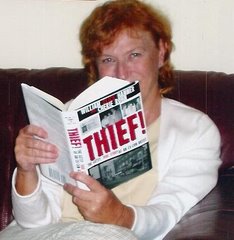
THIEF! The Gutsy, True Story of an Ex-Con Artist

  • Stay tuned for THIEF! book signings, media interviews and other THIEF! events
  • Media Reviews posted periodically
  • Mobwriter comments on true crime events and books

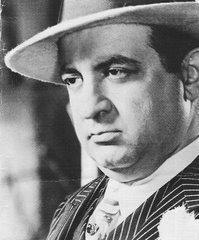
THIEF! character, Vince Eli

Friday, February 6, 2009

Spilotro Brothers Reap Revenge

The second big shot in Chicago's mob hierarchy gets life in prison. The following piece appeared in the blog, www.theChicagoSyndicate.com:


In the long history of the Chicago Outfit, few murders have captured national attention like the killings of Anthony and Michael Spilotro, two brothers found battered and buried in an Indiana cornfield in 1986.

On Thursday, the man reputed to be the one-time head of the Chicago mob stood before a federal judge with an emotionless stare, his hands folded in front of him as he prepared to hear his sentence for his role in the Spilotro killings. James Marcello's expression didn't change as U.S. District Judge James Zagel sentenced him to life behind bars. Marcello was believed to be the highest-ranking mobster felled by the 2007 Family Secrets mob conspiracy trial, and he was held responsible for its marquee murder.

The Spilotros were killed for bringing too much heat to the mob's lucrative arm in Las Vegas, then headed by Anthony Spilotro. The brothers' deaths were immortalized in the movie "Casino," which showed them being beaten with bats in a farmer's dark field.

The Family Secrets trial cleared up many of the myths surrounding the killings. Testifying for the government, mob turncoat Nicholas Calabrese explained how the brothers were actually lured to a suburban Chicago home with the promise of promotions but were jumped in a basement by a hit team.

In some of the most riveting testimony of the trial, Calabrese recounted how the men walked down the basement stairs. Realizing his fate, Anthony Spilotro asked whether he could say a prayer.

That moment was not lost on one of their brothers, Patrick Spilotro, a suburban dentist who aided federal authorities in the Family Secrets investigation. Spilotro was one of three relatives to address the court during Marcello's sentencing hearing and ask for a just punishment. Those who "denied my brothers a prayer . . ." he said, his voice trailing off, "deserve no mercy.

"Prosecutors alleged Marcello drove Calabrese and others to the murder scene. He might have known how his actions would hurt others, Patrick Spilotro said, as Marcello lost his father in an Outfit killing.

Assistant U.S. Atty. Markus Funk argued for a stiff sentence, describing Marcello as more cunning, courteous and adept than the other mob figures at the trial. In short, he was management material. "That is why he, unlike them, is in a different position in the Outfit," Funk said.

Marcello's lawyers, Marc Martin and Thomas Breen, told the judge there was little they could say that had not been repeated often during the trial. Marcello pleaded not guilty and always maintained his innocence, they said. "Mr. Marcello has denied his involvement in the Spilotro brothers' murder as well as [a third murder]," Breen said. "That's all he can do.

"When Zagel offered him a chance to address the court, Marcello declined, as many convicted reputed mobsters have historically done.

The judge then echoed Funk as he handed down the sentence, saying Marcello had shown self-control and judgment throughout the trial, unlike others who had sometimes come unglued. It was most significant to Zagel that "you could have done better," the judge told Marcello. "You know how to do better.

"Marcello spent most of the hearing looking relaxed in a dark olive suit, even when the son of another of his victims turned from the courtroom lectern to stare him down. Bob D'Andrea's father, Nicholas, was beaten to death in 1981 while mob leaders were questioning him about an unauthorized attempt on the life of a ranking Outfit member.

D'Andrea told Marcello to imagine his father's pain as he was beaten with the butt of a shotgun while tied up in the back of a car. One day, Marcello will have to explain himself to God, D'Andrea said. "I hope Mr. Marcello has some good answers for him," he said. "That's not life. That's eternity.

"At the defense table, Marcello sat still, one hand resting on his cheek.

Thanks to Jeff Coen

Monday, February 2, 2009

No Clowning Matter

Life in prison is no clowning matter. Photo of Joey Lombardo
at right soon after his capture in 2006. Here's the latest:

CHICAGO (AP) — Reputed mob boss Joseph "Joey the Clown" Lombardo was sentenced Monday to life in federal prison for serving as a leader of Chicago's organized crime family and the murder of a government witness in a union pension fraud case.

Lombardo, 80, was among three reputed mob bosses and two alleged henchmen convicted in September 2007 at the landmark Operation Family Secrets trial which lifted the curtain of secrecy from the seamy operations of Chicago's underworld.

"The worst things you have done are terrible and I see no regret in them," U.S. District Judge James B. Zagel said in imposing sentence. He also sentenced Lombardo separately to 168 months for going on the lam for eight months after he was charged.

Lombardo grumbled that he had been eating breakfast in a pancake house on Sept. 27, 1974, when ski-masked men beat federal witness Daniel Seifert in front of his wife and 4-year-old son and then shot him to death at point-blank range.

"Now I suppose the court is going to send me to a life in prison for something I did not do," Lombardo said. He said he was sorry for the suffering of the Seifert family but added: "I did not kill Danny Seifert."

In a last-minute effort to bolster his alibi, he read from two documents signed by Hollywood private eye Anthony Pellicano, now serving a 15-year sentence for wiretapping stars such as Sylvester Stallone and bribing police to run names through law enforcement databases. Pellicano was originally from Chicago.

Lombardo was one of the best-known figures in the Chicago underworld. His lawyer, Rick Halprin, told jurors during the trial that he merely "ran the oldest and most reliable floating craps game on Grand Avenue" but was not a killer.

Witnesses said he was the boss of the mob's Grand Avenue street crew — which extorted "street tax" from local businesses and engaged in other illegal activities.

He was sent to federal prison along with International Brotherhood of Teamsters President Roy Lee Williams and union pension manager Allen Dorfman after they were convicted of plotting to bribe U.S. Sen. Howard Cannon, D-Nev., to help defeat a trucking deregulation bill. Cannon was charged with no wrongdoing in the case.

Lombardo was later convicted in a Las Vegas casino skimming case.

Seifert was gunned down two days before he was due to testify before a federal grand jury. His two sons spoke at the sentencing about the pain of losing their father when they were still children.

Joseph Seifert recalled how he saw mobsters "chase my father like a pack of hungry animals" before shooting him.

Nicholas Seifert said that he succumbed to depression over the killing.

"I felt like a coward for many years for not seeking revenge for what those men did to my father," he said.

Lombardo used a wheelchair in court. Halprin declined to say what health problems his client has but said he needed to be sent to a prison where he would get adequate medical care.

Zagel acknowledged that he thought carefully about Lombardo's age in deciding on a sentence. But he said he wanted one that would not "deprecate the seriousness of the crime."

Zagel has already sentenced Calabrese to life and reputed mobster Paul Schiro to 20 years. Schiro was sentenced to 5 1/2 years in prison seven years ago after pleading guilty to being part of a gang of jewel thieves run by the Chicago police department's former chief of detectives.

Still to be sentenced are James Marcello, reputedly one of the top leaders of the mob, and Anthony Doyle, a former Chicago police officer who became an enforcer for Frank Calabrese. Also still to be sentenced is Nicholas Calabrese, Frank's brother and an admitted hit man who became the government's star witness.

Wednesday, January 21, 2009

Some Things Never Change

Seems like many Chicagoans believe corruption will always reign. On the following site citizens express dismay over the never-ending history of corruption: http://wordpress.com/tag/chicago-corruption/. (Governor Rod Blagojevich pictured in photo at right)

Jennifer Haberkorn of the Washington Times seemed to hit all the major points:

Politics and corruption the Chicago way
(Contact)
Tuesday, December 23, 2008

CHICAGO
A joke that made its way around Illinois in the 1970s was that if Libyan strongman Moammar Gadhafi wanted to give a local politician $1 million, funneled through a foreign bank, it would be a perfectly legal campaign contribution as long as it was disclosed.

Nowhere else in the country could a politician accept such a large donation from a non-American through a foreign corporation - let alone from such a controversial public figure.

ASSOCIATED PRESS Mobster Al Capone, here in 1931, got away with gambling and selling alcohol during Prohibition because he had a tight grip on City Hall. His men were known to roam the building looking for favors.

"But that's how things work here," said David Morrison, deputy director of the Illinois Campaign for Political Reform.

Not much has changed in Illinois politics since 1969, when Mr. Gadhafi took power thousands of miles away.

Political corruption has a long history here, and it isn't likely to go away anytime soon, locals say. Democratic Gov. Rod R. Blagojevich's recent arrest by the FBI on suspicion of trying to sell President-elect Barack Obama's Senate seat threatens to keep the stain alive.

Since 1971, more than 1,000 people in the Land of Lincoln have been convicted on public corruption charges. A handful were businesspeople, but most were elected officials.
There have been Chicago aldermen, county judges, city clerks, bailiffs and three governors, according to a tally kept by Dick W. Simpson, a former Chicago alderman and head of the political science department at the University of Illinois at Chicago.

Corruption dates to at least 1869, when three county commissioners were charged with signing fraudulent contracts to paint Chicago's City Hall. Three painters used whitewash and skimmed the difference.

In a city and state whose best-known resident worldwide could be Al Capone, that bit of thievery certainly wasn't the last. Politicians, police officers and even the 1919 Chicago White Sox have been accused of corruption.

Capone, for instance, was able to get away with gambling and peddling Prohibition-era booze largely because of his tight grip on City Hall. He contributed "substantially" - some said $260,000 - to Mayor William Hale "Big Bill" Thompson's 1927 campaign, according to Douglas Bukowski, author of "Big Bill Thompson, Chicago, and the Politics of Image."

Capone kept an office one block from the mayor's office, and he and his men were known to walk around City Hill, asking for favors.
Business expense?

Some Illinois business owners accept bribes as a typical business expense.

In the 1970s, the owner of the Arlington Park and Washington Park racetracks wrote off bribes to former Gov. Otto Kerner on her taxes, thinking they were a legitimate business expense. Her tax statement prompted an investigation into Kerner, who in 1973 was found guilty of accepting the bribes to build expressway exit ramps near the tracks.

Two other Illinois governors have been found guilty of political corruption as well.
Dan Walker, who was governor in the 1970s, received fraudulent loans for his business and his yacht, the Governor's Lady.

George Ryan, who held the governor's office from 1999 until 2003, is more than a year into a 6 1/2-year prison term after being found guilty of accepting bribes for trucking licenses as secretary of state, squashing an investigation and directing state contracts as governor.
He admitted to and apologized for his crimes for the first time this month as he appeals to President Bush for a last-minute commutation.

Ryan is at the Federal Correctional Institution in Terre Haute, Ind., after spending a year at a minimum-security prison in Oxford, Wis. - a popular destination for convicted Illinois pols.
So many public officials end up there that, upon seeing each other inside, they call out "Quorum call!" said author James L. Merriner in his book "Grafters and Goo Goos: Corruption and Reform in Chicago 1833-2003."

Former Rep. Dan Rostenkowski has referred to his time there - before a pardon from former President Bill Clinton - as his "Oxford education." Mr. Rostenkowski pleaded guilty to two charges of mail fraud for charges such as paying employees to do personal services and billing taxpayers for personal gifts.

Politicians, analysts and voters say political patronage has fueled this city's and state's temptation to the unseemly, one they say isn't going to wane until voters get fed up and elect true reformers.

"We have this situation because we have machine politics in both the city and the state - and it's both Democrats and Republicans," Mr. Simpson said.

Machine politics
Analysts say machine politics - in which financial contributions and party loyalty are rewarded with jobs and contracts - was cultivated and perfected by former Chicago Mayor Richard J. Daley, the current mayor's father.

He was never charged with any kind of corruption, but many of his employees were.
Voter groups are pushing for more stringent campaign contribution laws. Under the current system, any person, corporation or group can donate any amount of money to any candidate. The groups say limits would stem bribes and promises of goods or jobs in exchange for contributions. There are restrictions in most states and at the federal level.

The first limit on campaign contributions, which would curtail contributions from companies with state contracts, is scheduled to go into effect in January. The law's enactment was part of what began Mr. Blagojevich's fundraising flurry and prompted an investigation.

However, others argue that public officials or citizens who want to influence the other will find a way around such legislation.

State Rep. Jim Durkin, a Republican who represents a district in the western suburbs of Chicago and is the minority leader of the General Assembly's impeachment committee, points to convicted Washington superlobbyist Jack Abramoff, who bribed lawmakers despite federal restrictions.

"We can make all the changes in the law that we want, but it's not going to change attitudes," Mr. Durkin said. "We can't legislate morals."

Mr. Durkin, who ran unsuccessfully against Sen. Richard J. Durbin in the Illinois Democrat's 2002 re-election campaign, said he hopes that if anything, the latest scandal will entice voters to "get a better idea of the individuals they are voting for."

Some Republicans were quick to label Mr. Blagojevich's troubles as typical Illinois politics. He is accused of trying to "sell" the open Senate seat, attempting to bribe the Chicago Tribune to get rid of editorial writers he didn't like and withholding state funding in exchange for campaign contributions.

"This wasn't a secret," one Illinois Republican operative said of Mr. Blagojevich. "No one in the Democratic Party stood up and said, 'You have a serious problem with the feds; you need to step aside.' No one ran against him in the [2006] primary."

Mr. Blagojevich easily beat the one Democratic Chicago alderman who ran against him in the primary.

The Republican National Committee issued video ads highlighting links between Mr. Obama and the antics of his home state's politicians, but conventional wisdom says Mr. Obama and Mr. Blagojevich aren't close.

The Obama campaign committee donated just $1,000 to Mr. Blagojevich's campaign fund in October 2002, a small amount in Illinois politics.

Chicago newspapers reported that Mr. Obama's chief of staff is on wiretapped conversations speaking with Mr. Blagojevich's team, pushing for Obama associate Valerie Jarrett to get the open seat. Mr. Blagojevich, in clear and vulgar terms, says the Obama team isn't prepared to "pay to play" for the seat, according to the criminal complaint.

Others say linking Mr. Blagojevich and Mr. Obama isn't fair.

Former Rep. Cardiss Collins, a Chicago native who represented Illinois' 7th Congressional District from 1973 to 1997, said she was "embarrassed" when she heard the latest corruption story, but the bad apples in the bunch don't taint all Illinois politicians, particularly not the president-elect.

"It's a sad commentary on the governor," she said. "To splash it on the president-elect is wrong."
Copyright 2009 The Washington Times, LLC
[reprinted with permission]
Sunday, January 4, 2009

Slick, Tony Montana in Tokyo Joe Documentary


The following story appeared on the blog http://www.thechicagosyndicate.com/, featured on our Web site's links page. Slick and Tony Montana, our good friend and collaborator, are both interviewed in the documentary.

The entire blog entry is shown below, thanks to blog owner, Joe Batterz. Be sure to check out the site for fascinating true stories about the Chicago Outfit.


The yakuza, Japan's homegrown mobsters, are favorites of local filmmakers but not documentarians, for reasons entirely understandable. A documentary that seeks to delve into the inner workings of the Yamaguchi-gumi might find an audience, but the hurdles to making it, such as scouting subjects willing to dish openly (and possibly suicidally) on camera, would be formidable. Better to make another TV-friendly program on tuna fishermen.

Documentarian Ken'ichi Oguri, backed by uber-producers Kazuyoshi Okuyama and Chihiro Kameyama, has finessed this difficulty by focusing his new film, "Tokyo Joe: The Man Who Brought Down the Chicago Mob (Mafia o Utta Otoko)," on Ken Eto — a Japanese-American FBI informant who put 15 Chicago mobsters and mob associates behind bars in the 1980s.

Eto was no ordinary snitch. Born in California in 1919 and raised by a harshly disciplinarian father, Eto was a wild, scrappy and highly intelligent kid. He found his true metier in a World War II detention camp, where he fleeced fellow detainees in poker games. After the war, he settled in Chicago, where he honed his skills in card sharping while insinuating himself into the mob-run gambling business.

In 1983, Mafia capo Vincent Solano feared that Eto, recently busted for running a massive numbers operation and out on bail, was going to spill to the cops. He ordered a hit, carried out by two henchmen, who drilled three bullets into Eto's skull in a parked car. Incredibly, Eto survived, and, while recovering in the hospital, decided that Solano's betrayal trumped his loyalty to his Mafia bosses. He entered the FBI's witness protection program and spent the next several years giving testimony that delivered a body blow to the Chicago mob.

Oguri tells this story through interviews, mostly notably with Elaine Smith, the former FBI agent who put Eto behind bars (and later wrote a book about him), Jeremy Margolis, the former federal prosecutor who persuaded Eto to turn snitch, and Steven Eto, Eto's son by his second wife.

These talking heads are fascinating characters in their own right. Smith, who joined the Bureau at the late age of 34 when it was still a mostly male preserve, comes across as a salty, wised-up type, spinning anecdote after engaging anecdote about Eto, his case and the ways of the Chicago mob. Of more than 1,000 victims of mob hits, she claims, Eto was the only one to survive. Steven Eto pungently humanizes his father, who ran numbers out of a coffee shop near home and once memorably told his young son, "If you bring a weapon to a fight, be prepared to kill the guy, because if you don't, you'll have an enemy for the rest of your life."

Eto himself appears only fleetingly on the screen, being badgered by the media after his arrest and testifying as a witness for the prosecution, but he is a riveting presence whose hooded eyes see all but tell nothing. Oguri's film about his exploits is, for anyone interested in Mafia lore, pure manna from wise-guy heaven.

Thanks to Mark Schilling

Thursday, January 1, 2009

$2 per new book...Have a "Wonging" New Year!

To encourage walk-in traffic to the Pi Yee Press Store at 4855 West Nevso Drive in Las Vegas, (702-579-7711) owner, Stanford Wong, has filled a box with books he's willing to sell at $2 each. These are all new books not carried through the store's catalogue and available for walk-in customers only.

While the store specializes in Blackjack, it features a wide variety of other gambling books and merchandise.

Pi Yee Press Store is also giving out:

One free book from the box with another store purchase, and

Two free books with the purchase of two store items

It's worth checking out these great bargains if you're on a budget like many of the rest of us!

Or check out the store online: http://www.bj21.com/

Nope...I don't get a cut. Happy hunting!

Mob Writer

Monday, December 22, 2008

MURDER ACROSS FROM SLICK'S!


Imagine waking up to see yellow police tape surrounding the house directly across the street from where you live? Well, that's exactly what happened to Slick a few days ago. (See photo above.) Slick's neighbor, an older guy maybe in his 80s, was known to take in homeless people on occasion. Perhaps one of them wasn't overly appreciative? The old guy died of knife wounds. After police questioned Slick, he took around 20 photos of the crime scene including the corpse being carried out in a body bag.
Lesson 1: Don't take in strangers or even people you know who carry knives.
Lesson 2: If you think that police tape is likely to block your drive, park around the block.
P.S. Strange that, as of this printing, the murder has yet to appear in the news.

Friday, December 5, 2008

How to Beat a Lousy Economy


Here's a "Slick tip" from Las Vegas. Check out my casting agency page below and see what I'm currently up to while our economy is in the dumpster and the LV Strip looks like "Arrested Development." While I'm sitting around 8 hours for my 30-seconds of on camera fame, I talk up our book Thief to the movers and shakers and anyone on the set. Our business card that looks just like a poker card always draws a lot of interest.

Maybe you too can make money and beat the lousy economy. Here's the talent agency's page:

Slick